


Post-Construction Cleaning: Much More Than Just Cleaning
Table of Contents
-
The Steps Involved in Restoration: Why a Single Visit Isn't Enough
-
Entrust Your Project Completion to an Expert: Where and How to Contact Us
The renovation is complete. Yet the windows still have traces of adhesive on them, a whitish film covers the tile floors, and dust reappears as soon as a door is opened. Simply mopping the floor won’t solve the problem—it’s likely to just spread the residue around or even scratch the new surfaces.
Key Takeaways
-
Contrary to popular belief, a cloth and a standard cleaning product aren't enough to restore something to its original condition
-
Post-construction cleaning is a nearly industrial-scale operation that requires specialized equipment (single-brush machines, scrubber-dryers) to remove successive layers of construction debris.
-
KHOMCLEAN stands out for its rigorous mechanical approach, as opposed to amateur manual cleaning
-
Compare the options and take action.
The post-construction cleanup, this involves restoring the premises to their original condition after construction work, prior to their handover or occupancy. This process addresses construction-related contaminants: mineral dust, cement slurry, paint splatters, adhesives, and greasy deposits. It often falls more under the category of industrial cleaning than routine maintenance.
At KHOMCLEAN, our approach is based on a rigorous mechanical method tailored to the materials and the actual condition of the job site. The goal is not to create a temporary illusion on the day the keys are handed over. It’s about delivering surfaces that are clean, well-maintained, and ready for use—without leaving you to deal with a series of rework requests.
The Steps Involved in Restoration: Why a Single Visit Isn't Enough
Why does a floor still look dirty after two cleanings? Because the layers of dirt are not all the same. Loose dust can be vacuumed up. Sticky residue should be treated spot-by-spot. A cement film requires a method compatible with the floor covering. By mixing everything together with a damp mop, you create a film that dries, turns white, and traps new dust.
The steps involved in post-construction cleanup must therefore follow a specific order. The first task is to identify materials, construction debris, and sensitive areas. Porcelain tile is not treated the same way as limestone, hardwood flooring, or resilient flooring. Manufacturers’ instructions and the drying times for grout, paint, and coatings also determine the cleaning process.
-
Clear the spaces. Rubble, scraps, and packaging must be removed within the agreed-upon area. The removal of protective coverings must be coordinated with the contractors to avoid exposing the finished surfaces too soon.
-
Dust methodically. Work proceeds from top to bottom: high-up elements, ledges, window and door frames, baseboards, and then floors. Plaster dust is first removed using a vacuum cleaner designed for fine dust, rather than by sweeping, which stirs up the dust and puts it back into the air.
-
Treat adherent deposits. Paint, glue, and grout residue are removed using tools and products selected after a discreet test. Scraping without first identifying the surface carries the risk of permanent damage.
-
Wash, drain, and rinse. The mechanical action removes any remaining dirt. The dirty water is collected, and then a rinse is performed when required by the protocol.
-
Check after drying. Stains and halos are often more visible on a dry surface under low-angle lighting. This is when targeted touch-ups become essential.
Post-construction cleanup must also be properly scheduled. Having a drywall installer or tile setter return after the finishing work is complete may require another visit. It’s best to plan for a preliminary cleanup if necessary, followed by a final cleanup once the messy work is finished.
As for the obligation to clean up at the end of a construction project, the scope of this obligation is specified in the contractual documents, particularly the estimate, the contract, and the technical specifications, if applicable. Do not confuse waste removal by contractors with a detailed restoration of the premises prior to occupancy: these services must be clearly assigned.
From Industrial Equipment to Results: KHOMCLEAN’s Expertise
A machine cannot replace a professional assessment. However, it does allow for consistent cleaning and the removal of dirt that is difficult to achieve through manual cleaning alone over large areas. KHOMCLEAN's expertise lies in matching the right equipment with the right protocol, rather than systematically using the most aggressive treatment.
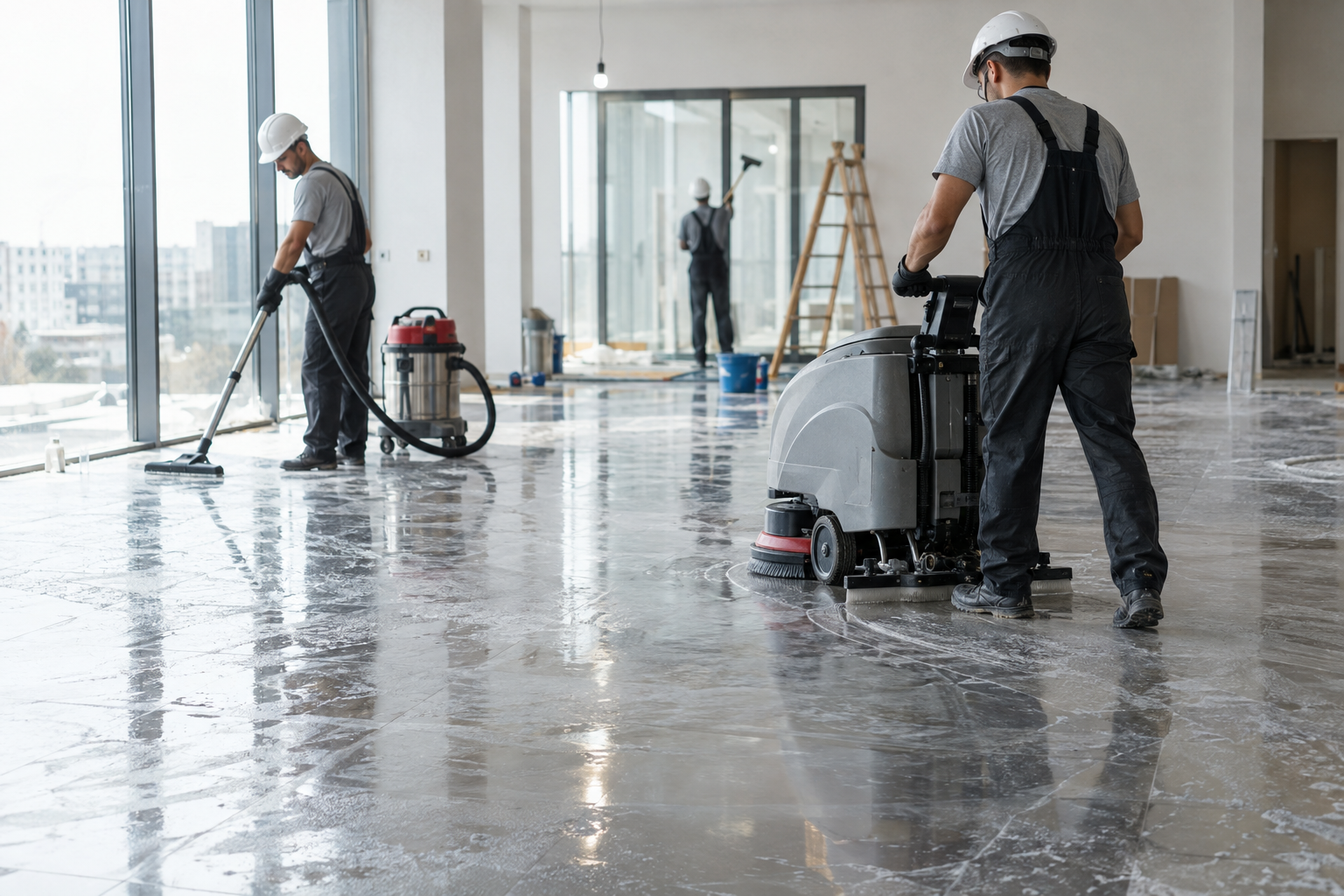
The single-brush machine provides controlled mechanical action to remove stubborn deposits and deep-clean certain floors. Its effectiveness depends on the disc or brush used, any cleaning solution applied, the contact time, and the sensitivity of the floor surface. A disc that is too abrasive can dull a new finish. The machine removes dirt, but cleaning it up usually requires a wet vacuum or additional equipment.
The’floor scrubber works on a different principle: it washes, brushes, and vacuums up the dirty water in a single pass. In open-plan offices, retail spaces, or large open areas, it ensures consistent cleaning and minimizes residual water. It does not eliminate the need for pre-treatment of stains or finishing touches on corners, baseboards, and hard-to-reach areas.
Industrial cleaning also involves the use of more specialized equipment:
-
A vacuum cleaner suitable for the type of dust present. Fine mineral dust requires filtration and a vacuum cleaner class selected based on the identified risks. A household vacuum cleaner is not, by default, a sufficient solution.
-
Professional steam cleaning. It may be suitable for certain applications and surfaces, after verifying its resistance to heat and moisture. It is not a universal treatment for adhesives or cement.
-
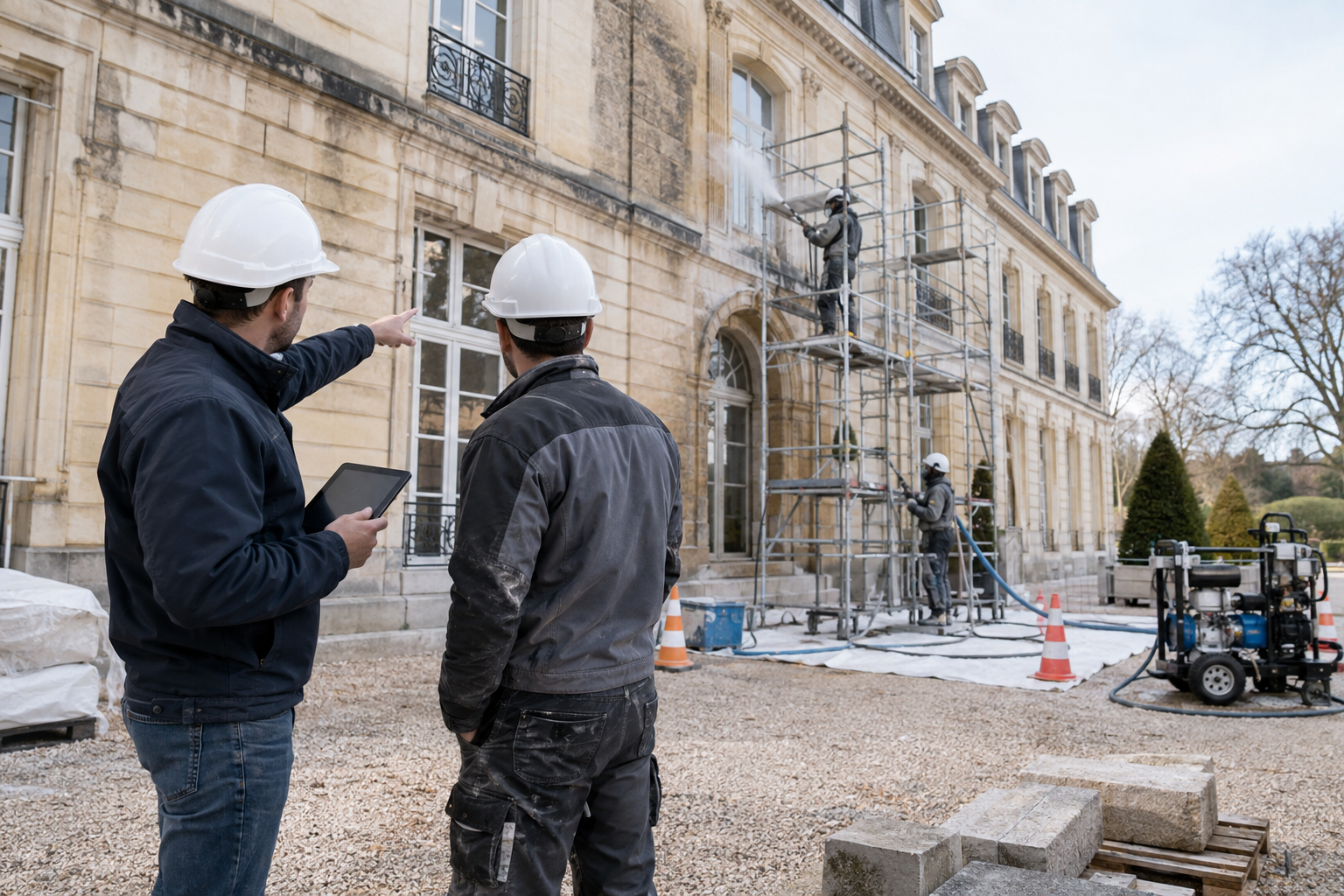
The pressure washer, often called a Karcher. It is suitable for use on certain compatible exterior surfaces, provided that pressure, splashing, and water drainage are properly managed. In a new interior, widespread use of this material would be a bad idea.
Floor degreasing is a good example of this need for precision. It requires a compatible product in the correct concentration, sufficient mechanical action, and complete recovery of the contaminated solution. Leaving detergent on the floor can result in a sticky or slippery film, even if the surface appears clean at the time.
KHOMCLEAN prioritizes this approach of systematic cleaning after construction work. Machine-based cleaning effectively treats surfaces that lend themselves to it; manual labor takes care of the details. There is no point in pitting the two against each other. On the other hand, attempting to restore an entire building using standard cleaning equipment is to start with an unsuitable method.
Entrust Your Project Completion to an Expert: Where and How to Contact Us
Your delivery is coming up, and several companies are still working on-site. It’s not just a matter of finding an available team—you need a professional cleaning service provider able to understand the constraints of the construction site, define the scope of their work, and fit into the schedule without hindering other team members.
To request KHOMCLEAN’s services, submit your request using the company’s contact information, specifying the site address first. The service area, availability, and necessary resources can then be confirmed. There’s no need to wait until everything is finished to prepare a post-construction cleaning estimate: floor plans, recent photographs, and a projected timeline already provide a basis for discussion.
A usable request contains some essential information:
-
The type of building and the areas involved: offices, retail spaces, common areas, commercial spaces, or a home built by a professional.
-
Materials: floors, windows, woodwork, and equipment that need to be cleaned, along with their maintenance instructions, when available.
-
Expected condition upon arrival: rubble removed or not, protective coverings still in place, furniture installed, work still to be done.
-
Access: parking, elevator, floors, water and electricity supply, and drainage for wash water.
-
Deadlines: check-in, client visit, settling in of the occupants, and any late-stage work by other contractors.
Are you trying to figure out the cost per square meter for post-construction cleaning? Surface area alone doesn’t tell the whole story. A large, open area may be easier to clean than a small, cluttered space covered in splatters and with numerous windows. The price of a post-construction cleanup depends, in particular, on how firmly residues are adhering, accessibility, the level of finish, and the resources required. A site visit helps clarify these factors when photos aren’t enough.
To compare one post-construction cleaning company with another, look at the scope of services before considering the price. Does the quote specify the removal of protective coverings, windows, window frames, bathrooms, floors, and touch-ups? Who is responsible for waste disposal? A post-construction cleaning company should clearly outline these details—not leave you to figure them out when the work is delivered.
This B2B service is planned with a designated point of contact and agreed-upon guidelines. Whether it involves cleaning a home construction site for a builder or restoring a commercial building, clearly defining the areas and inspection criteria helps prevent misunderstandings.
Conclusion
Treat post-construction cleanup as a full-fledged project, not as a task to be tacked on at the last minute. This is the best way to preserve the finishes and ensure the building is ready for use by the scheduled date. Post-construction cleaning is performed on new structures: using the wrong product, abrasive, or method can cost far more than just an extra pass.
For the construction manager, the priority is to establish a clear cutoff point between messy work and finishing work. A cleaned area must not be reused as a material handling route without proper protection. When concurrent work is unavoidable, phasing the work by floor or by section is preferable to starting general work too early, followed by scattered touch-ups.
When inspecting the work, check the dry surfaces and the details that really matter for everyday use: no residue on the edges, windows free of unsightly streaks, floors free of residual film, and restrooms ready for use. The inspection should also help distinguish between dirt that can still be removed and a defect in the surface itself. A scratch, a chemical burn, or a poorly applied sealant will not disappear with more vigorous scrubbing.
A good post-construction cleaning company also knows when not to push the issue. Identifying a problem, reporting it, and preventing it from getting worse are all part of the professionalism expected of us. This judgment is just as important as the power of the machines. The single-brush machine and the scrubber-dryer are production tools; the result depends on the protocol, organization, and final inspection.
For your next project, contact KHOMCLEAN with the address of the premises, the square footage, a few photos, and your move-in date. This information will help us assess your request, determine whether a site visit is necessary, and prepare a tailored proposal. You’ll then have a scope of work to approve and a cleaning service to schedule, rather than a cleaning issue that needs to be resolved urgently before the keys are handed over.
Frequently Asked Questions
Why does the floor remain whitish after several washings at the end of the project?
Mineral dust, adhesives, and cement residue cannot be removed in the same way: a damp mop can mix them together and form a film that turns white as it dries. Restoration requires appropriate vacuuming, targeted treatment of the deposits, followed by mechanical cleaning with recovery of dirty water and rinsing when the protocol calls for it.
What is the difference between a single-brush machine and a scrubber-dryer when cleaning up after construction work?
The single-brush machine applies controlled mechanical action to remove stubborn deposits, but removing them typically requires a wet vacuum or additional equipment. The scrubber-dryer washes, brushes, and vacuums up the dirty water in a single pass, making it particularly suitable for large, open areas. At KHOMCLEAN, the choice depends on the floor surface and the type of residue, while corners and details are still handled manually.
How can you avoid damaging new surfaces during post-construction cleaning?
First, you must identify the materials, follow the manufacturers’ instructions, and allow time for joints, paint, and coatings to dry. Tools and products designed for adhesive residues should be selected after a test on an inconspicuous area: a disc that is too abrasive can dull a new finish. If a mark is caused by a scratch or a chemical burn, scrubbing more vigorously will not remove it.
When should the final cleaning be scheduled if several companies are still working on site?
The final cleanup should be scheduled once the messy work is complete, with preliminary rough cleaning if necessary. If several contractors still need to work on the site, it is preferable to clean in phases—by floor or by section—rather than performing a general cleanup too early, followed by scattered touch-ups. The schedule must also account for material drying times and prevent a cleaned area from becoming a handling route again without proper protection.
Why isn't a price per square meter sufficient for estimating the cost of a post-construction cleanup?
The surface area alone does not reflect the difficulty involved: a large, open area may require less work than a small, cluttered space covered in splatters and featuring numerous windows. The price depends, in particular, on how firmly the residue is adhering, accessibility, the level of finish required, and the resources needed. To request a quote from KHOMCLEAN, please provide the address, surface areas, photos, and the delivery date; a site visit may be arranged to supplement this information.
What should you look for when comparing two post-construction cleaning quotes?
First, compare the scope of work: the removal of protective coverings, windows and window frames, plumbing fixtures, floors, and any necessary repairs must be clearly assigned. Also verify who is responsible for waste removal, as this task is distinct from detailed restoration work prior to occupancy. The areas involved and the inspection criteria must be clearly defined, including a check of dry surfaces to identify any residual haze or film.

 Français de Belgique
 English
 Nederlands (België)
0 Comments