


Deck Cleaning: How to Restore Your Deck to Like-New Condition with KHOMCLEAN
Table of Contents
-
DIY Tips vs. Professional Expertise: Criteria for Effective Cleaning
-
The 3-Step KHOMCLEAN Method: From Anti-Foam Treatment to High-Pressure Cleaning
-
Why Choose a Specialized Service for Your Patio or Parking Lot in Brussels?
A patio doesn’t turn gray overnight. Urban dust builds up, rain leaves marks, and moss creeps into the grout. After walking past it so many times, you eventually come to see that color as normal. Then, once the first tile is cleaned, the contrast is striking: what we thought was simply aging was, in part, just dirt.
Key Takeaways
-
The article highlights the phenomenon of becoming accustomed to urban grime and the aesthetic impact of a thorough cleanup
-
He contrasts the limitations of DIY solutions with the power of the KHOMCLEAN method (anti-foam and high-pressure rotary) to transform terraces and parking lots in Brussels
-
Criteria for Effective Cleaning
-
Compare the different options before making a decision.
In Brussels, this issue affects office terraces as well as condominium courtyards and parking lots. The terrace cleaning service offered by KHOMCLEAN combines anti-moss treatment with mechanical cleaning tailored to the surface. The goal: to restore a clean and inviting surface, without leaving you to handle the equipment, access, and logistical challenges of the job on your own. There is one essential rule: You choose the method based on the soil, not the other way around.
DIY Tips vs. Professional Expertise: Criteria for Effective Cleaning
What is the most effective product for cleaning a patio? The one that’s right for the material and the type of dirt. A layer of dust, a growth of moss, and an oily stain aren’t treated the same way. Looking for a miracle product before identifying the problem is often a waste of time and can even damage the surface.
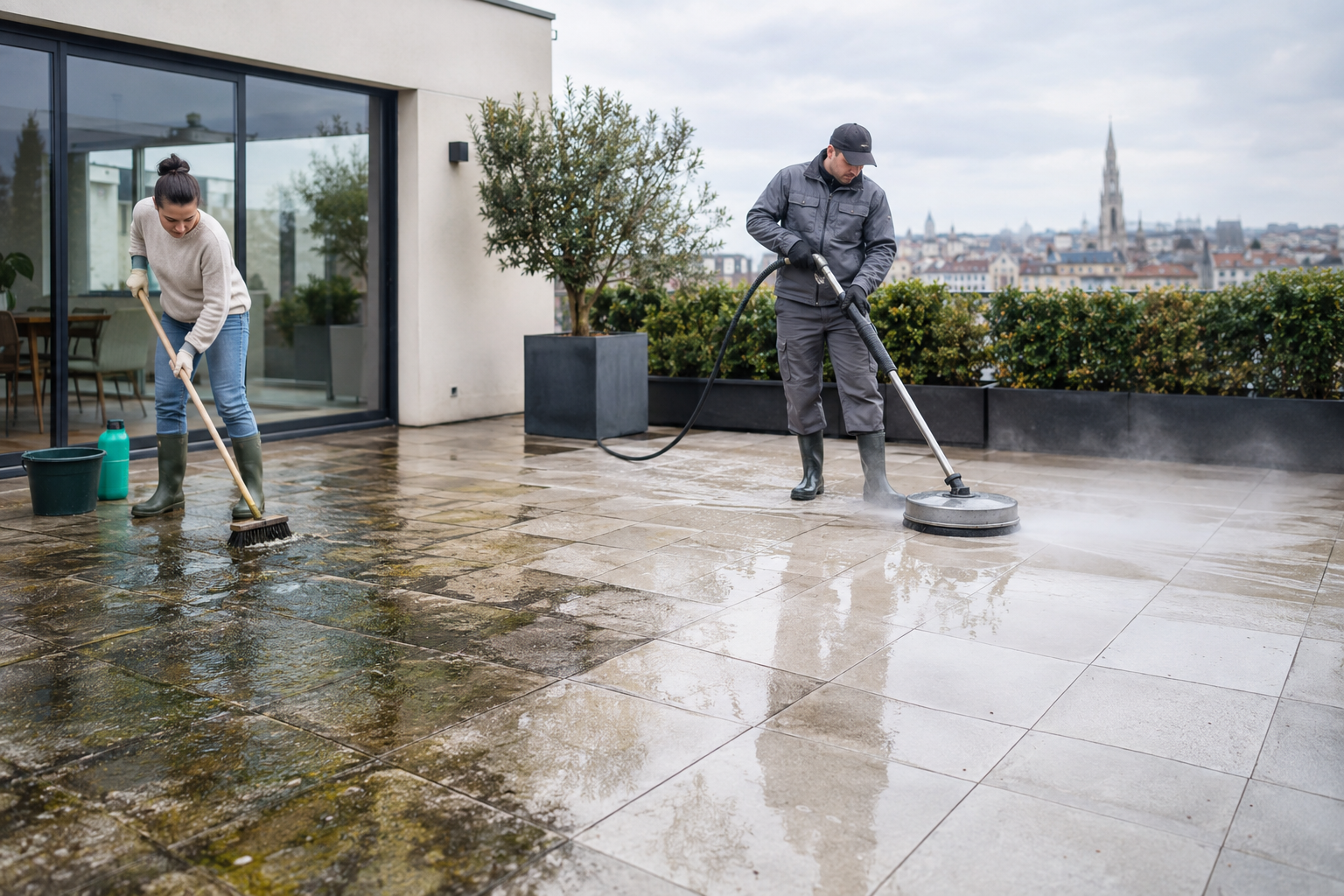
For routine deck cleaning, start simple: sweep up leaves, clear the drains, and test a small, inconspicuous area. A scrub brush and a mild detergent compatible with the deck material are often sufficient for recent dirt. Follow the dosage instructions, work in sections, and don’t let the product dry if the instructions call for rinsing.
-
On the wood: To clean a wooden deck, use a non-metallic brush, working in the direction of the grain, and a wood deck cleaner suitable for the type of wood or finish. Cleaning wooden decks requires, above all, a gentle touch: scrubbing too aggressively can raise the grain and leave marks.
-
Engraved on the stone: Choose an outdoor stone cleaner that is compatible with the type of stone. When cleaning a limestone patio, avoid acidic products, including vinegar. A product marketed for «outdoor floors» is not automatically suitable for all types of stone.
-
On the tile floor: Maintaining outdoor tile also involves caring for the grout. Avoid scrubbing brittle grout too vigorously, and make sure the detergent is compatible with any surface treatments that may be present.
-
On concrete: A concrete patio cleaner may be suitable for common deposits. Greasy stains sometimes require a specific degreaser, with the residue disposed of in accordance with site-specific requirements.
So, old-fashioned home remedies do have their limits. Black soap can be effective on certain surfaces, but if you use too much and don’t rinse it off properly, it leaves a film. As for using bleach to remove moss from a patio, we don’t recommend it as a first resort: it can discolor certain materials and damage plants. Never mix cleaning products, especially bleach with an acid or ammonia.
Using a Kärcher on a wooden deck? Not on the highest setting, and not with a concentrated nozzle. Depending on the condition of the wood and the manufacturer’s recommendations, high-pressure cleaning may even be best avoided. Effective cleaning protects the surface just as much as it removes dirt. When deposits are caked on, the surface is large, or the material is fragile, professional expertise becomes essential.
The 3-Step KHOMCLEAN Method: From Anti-Foam Treatment to High-Pressure Cleaning
The process consists of three steps: preparation, treatment, and then cleaning and inspection. The order in which these steps are performed is important. Running a powerful machine directly over worn joints or an incorrectly identified surface may produce dramatic results in the short term, but can cause lasting damage.
1. Inspect the surface and prepare the area. Before cleaning the patio, you must identify the material, inspect the joints, check for cracks, and locate the drains. Cleaning an unfinished concrete patio slab is not the same as cleaning treated stone or wooden decking. A spot test allows you to check how the surface reacts and adjust the cleaning intensity accordingly.
Preparation also includes the area surrounding the surface: furniture, landscaping, building facades, outdoor outlets, and high-traffic walkways. In a parking lot, vehicles must be moved out of the designated area. Markings and access control prevent occupants from walking across a wet surface that is being treated.
2. Apply an anti-foaming treatment when deposits warrant it. The deck de-foamer targets plant growth according to the instructions on its label. It is not a universal degreaser: oil stains or mineral deposits require a different solution. The product must be approved for the intended use, compatible with the surface, and applied under the specified weather conditions.
The application time cannot be improvised. Some treatments require rinsing, while others follow a different protocol. The sequence of steps, including mechanical washing, therefore depends on the instructions. Protecting the plants and controlling runoff are part of the job—they are not just incidental precautions.
3. Clean with a suitable rotary high-pressure washer, then check the results. On compatible mineral surfaces, the rotary high-pressure cleaner equipped with a floor cleaning head operates smoothly. Its bell-shaped nozzle limits splashing without eliminating it entirely. This equipment should not be confused with a concentrated rotary nozzle, which is significantly more aggressive on sensitive surfaces.
Pressure, flow rate, and cleaning speed are adjusted according to the surface type. The edges and corners then require finishing. When cleaning a parking lot, oily areas may require separate pretreatment, as well as proper management of contaminated water.
The final inspection focuses on the uniformity of the cleaning, the visible condition of the grout, and water drainage. Once the surface is sufficiently dry, it becomes easier to distinguish between any remaining marks and natural variations in color. Power helps; the settings determine the quality of the result.
Why Choose a Specialized Service for Your Patio or Parking Lot in Brussels?
In a Brussels condominium, cleaning often begins with a very practical question: where do residents go while the cleaning is taking place? For a business, the focus is more on access to offices, delivery areas, or reserved parking spaces. The challenge isn’t just about getting a clean floor. It must be done without disrupting the premises.
Hiring a professional deck cleaning service allows you to combine the assessment, selection of equipment, and organization of the project into a single service call. The location of a water source, drainage options, the distances equipment must be moved, and the schedule for when the area will be in use must be clarified before work begins. This planning prevents last-minute requests on the morning of the appointment.
When it comes to cleaning your patio in Brussels, the right professional should be able to explain what they plan to do and why. What treatment should be used on this stone? How will nearby plants be protected? What method should be used if the grout is crumbling? A true expert in patio cleaning in Brussels isn’t just recognized by the equipment they use, but by the precision of their answers.
The aesthetic result has an immediate impact on how the space is perceived. An entrance free of green deposits appears better maintained; a cleaned-up courtyard reveals contrasts that had gone unnoticed. By removing certain slippery deposits, the treatment also helps reduce the risk of slipping without turning the surface into a non-slip floor.
However, we need to be clear about the promise to refurbish the exterior: Cleaning is not the same as repairing. A cracked tile will remain cracked. Weathered wood may require a specific treatment to remove the weathered appearance, followed by a compatible finish, if the goal is to restore a color closer to the original. An old stain that has penetrated a porous material may remain partially visible.
Are you comparing prices for deck cleaning or looking for a rate per square meter? The surface area alone isn’t enough to determine the scope of the job. The material, the level of dirt buildup, accessibility, and water management all affect the work required. Request a quote with a clearly defined scope of work, rather than an estimate that doesn’t reflect the actual condition of the site.
Finally, professional deck maintenance prevents you from having to wait until the deck is heavily soiled. The frequency of maintenance depends on shade, vegetation, humidity, and usage. When cleaning parking lots in Brussels, vehicle traffic and grease buildup are also factors to consider. Between cleanings, it’s helpful to remove leaves and keep drains clear—terrace maintenance starts with these simple steps.
Conclusion
Real change is often evident in the details: the grout lines become visible again, the tiles regain their original hues, and the entryway no longer looks neglected. You no longer see just a large, dark surface. You see the flooring you originally chose, with all its qualities and any signs of wear and tear.
To achieve this result, there’s no need to keep trying different products or increase the pressure with each pass. The best approach is to identify what is causing the surface to become dirty, then choose a method appropriate for that specific issue. Anti-moss treatment addresses plant growth; mechanical washing removes deposits depending on the surface’s durability. Neither of these methods can replace a proper assessment.
Would you like to have KHOMCLEAN take care of your patio, yard, or parking lot? Please have some information ready so we can get a clear picture of your request right from the start:
-
Approximate surface area and material: Specify whether the surface is wood, stone, tile, or concrete, and indicate any known protective treatments.
-
General and close-up photos: Point out any buildup, grout lines, specific stains, and hard-to-reach areas.
-
Occupancy restrictions: Indicate peak times, areas that must remain open, and options for moving furniture or vehicles.
-
Available equipment: List any visible water sources and drainage areas, without assuming that all of them will be usable.
These elements make it possible to plan a realistic response and identify the issues that require on-site verification. They also help clarify responsibilities: who clears the area, what safety measures are in place, and under what conditions the space can be reused.
Contact KHOMCLEAN to get a quote for your patio cleaning project in Brussels. Ask for a detailed explanation of the method, a clear scope of work, and an approach tailored to your building. This is the right foundation for restoring a well-maintained exterior without turning the cleaning process into a project you have to manage yourself.
Frequently Asked Questions
Can a terrace that has turned gray regain its original appearance after being cleaned?
Urban dust, rain streaks, and moss gradually build up to the point where their color eventually seems normal—a deep cleaning can then reveal forgotten shades. However, it does not repair cracks or wear and tear, and some old stains may remain visible. On weathered wood, restoring a color close to the original may require a specific treatment to remove the weathered patina, followed by a compatible finish.
When is a home cleaning sufficient, and when is it better to call in a professional?
For recent stains, a scrub brush and a mild detergent compatible with the flooring are often sufficient, after testing on a small, inconspicuous area. When deposits are caked on, the surface area is large, or the material is delicate, professional expertise becomes essential. It allows for a comprehensive assessment of the floor, selection of the appropriate treatment, and organization of the project, rather than repeatedly testing different products.
Can you use vinegar, bleach, or a Kärcher on all patios?
No: Vinegar and other acidic products should not be used on limestone, while bleach can discolor certain materials and damage plants. On wood, a Kärcher set to maximum pressure or equipped with a concentrated nozzle may leave marks; depending on the condition of the surface and the manufacturer’s recommendations, high pressure may even be best avoided. Never mix products, especially bleach with an acid or ammonia.
How does the KHOMCLEAN method work for cleaning a patio?
The procedure begins with an inspection of the material, joints, and drains, followed by preparation of the area and a spot test. An anti-foam treatment is applied if plant growth warrants it, following the product instructions, before high-pressure rotary cleaning is performed on compatible mineral surfaces. The pressure, flow rate, and travel speed are adjusted to suit the surface; finishing touches and a final inspection complete the job.
What do you need to plan for when cleaning a shared patio or parking lot in Brussels?
Before the operation, it is necessary to clarify which routes must remain open for residents, access to offices or delivery areas, and occupancy schedules. The relocation of furniture or vehicles, protective measures, signage, water sources, and evacuation routes must also be planned. This preparation helps determine who will clear the area and under what conditions the space can be reused, avoiding the need to improvise on the morning of the appointment.
What factors affect the price of deck cleaning?
The surface area alone is not enough to determine the price: the material, the level of soiling, accessibility, and water management all affect the amount of work required. To get a quote with a clear scope of work, provide the approximate area, general and close-up photos, as well as any occupancy restrictions and available equipment. This information helps define the scope of the job and identify areas that require an on-site inspection.



 Français de Belgique
 English
 Nederlands (België)
0 Comments